What Earthquakes Reveal About Rigidity in the Body
Mar 22, 2026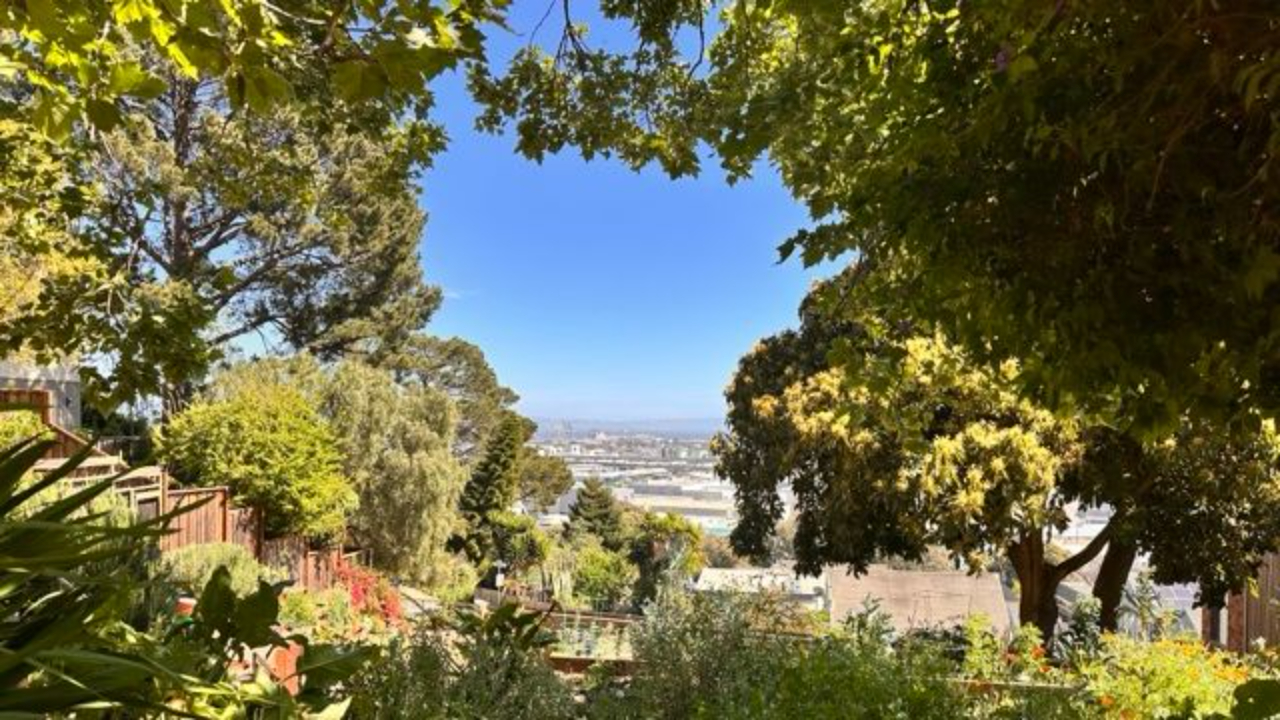
Most ankle sprains don’t begin with a wrong step. They appear there.
Earlier that day, I passed a woman sitting in her car with a boot on her foot. We see this kind of thing all the time: the sprained ankle, the sudden fall, the back that “goes out.” It looks like it happened in one moment — a wrong step, a hole in the sidewalk, a curb that was missed. But injuries rarely begin in the moment they appear.
They often build quietly over time. Not because people are careless, and not necessarily because they do not exercise. Many people go to the gym, lift weights, run, stretch, and still their bodies gradually become stiff, less responsive, and more vulnerable to injury. That is the part most people miss.
So what does this have to do with earthquakes?

The Hidden Garden
Earlier that same day, I was walking near my home in San Francisco on a path I have taken many times before. And for the first time, I noticed a small sign I must have passed again and again without really seeing it: Community Garden.
Curious, I stepped down a narrow set of stairs between the houses. The moment I descended, the air changed. It became cooler, softer, slightly moist. The smell of soil and leaves replaced the dry warmth of the street above. I kept walking down the steep steps until I saw an inviting opening — a small cluster of trees, and beyond it a quiet garden. There was even a half-broken chair, somehow inviting, as if it had been left there waiting.
Vegetable beds stretched in front of me. Children moved between the rows. In the distance I could see the bay shimmering, and between the water and the garden the highway cut through the industrial edge of the city. Cars rushed by in the distance. The outer world was still there, loud and moving fast. And yet inside this small pocket of land, something felt entirely different.
There was a chair in the sun that felt as if it had been waiting for me, so I sat down. Woody, my faithful four-legged friend, settled beside me. Usually, outside, he remains alert, scanning and ready to react. But here he simply lay down, calm and observant, not bracing, not guarding.
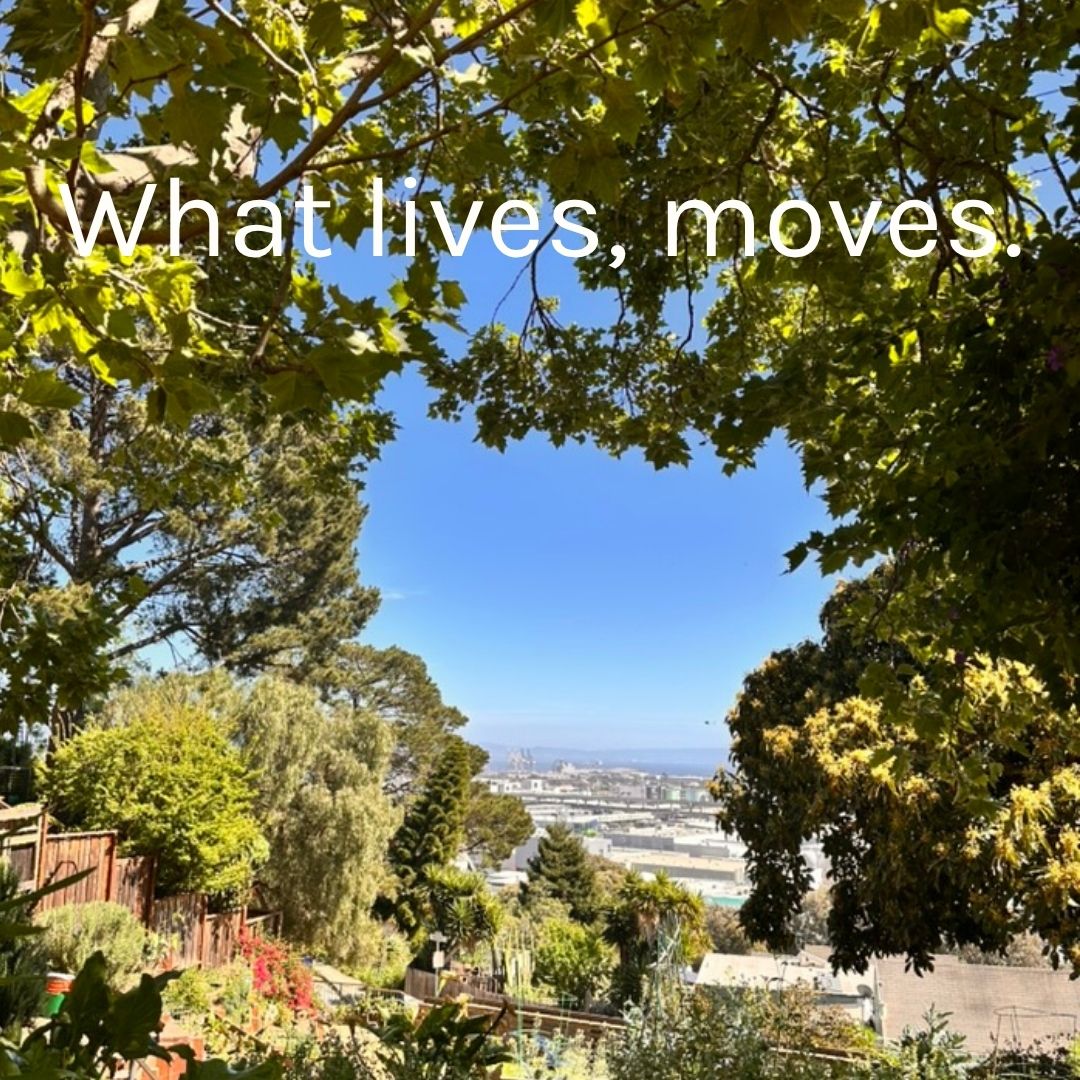
As I sat there, I started noticing movement everywhere. Leaves were swaying in the wind. Branches shifted above me. Insects hovered perfectly still for a moment and then darted away. The longer I watched, the clearer it became: almost everything in nature moves.
The leaves move. The branches move. The insects move. Light shifts across the ground. Even the trees seem alive with motion when you watch closely enough. The only things that appeared completely rigid were the houses, the fences, and the railings.
And that is when the connection came.
What Earthquakes Reveal
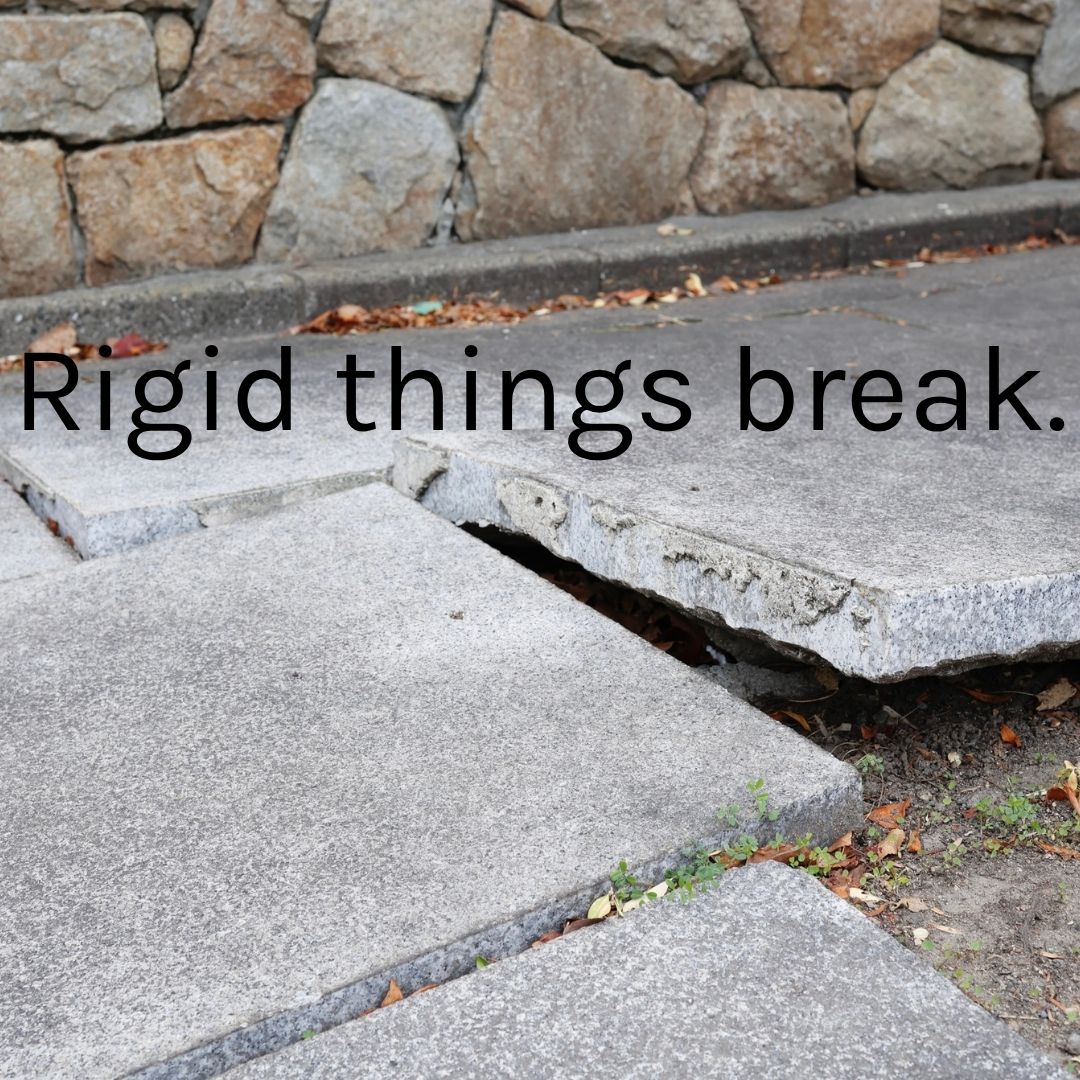
San Francisco sits on moving ground. Deep beneath our feet, the earth shifts along fault lines as massive plates of land slide past one another. Sometimes we feel that movement as earthquakes. For years, people tried to build structures that resisted the shaking. But engineers learned something important: rigid buildings break. The buildings that survive are the ones designed to move with the earth.
Sitting in that garden, watching the leaves sway above me, I realized how closely this mirrors what I see in the human body.
Many people believe they move enough because they exercise. But much of modern life places the body into fixed shapes for hours at a time: sitting at computers, driving, looking down at phones, holding tension through the jaw, shoulders, spine, and hips. Even exercise can become narrow, with a few joints moving in predictable directions while the rest of the body stays fixed.
Where Injuries Really Begin
Over time, the body loses responsiveness. And it is not only the joints that become rigid. The nervous system does too.
When the nervous system becomes less responsive, the muscles no longer organize quickly enough to support us. They do not catch, adapt, and redistribute force with the timing that real life requires. Then a small dip in the sidewalk, a missed step, or a hidden hole becomes the moment of injury.
Often the response is immediate: It wasn’t my fault. The city didn’t fix the hole. And sometimes that is true. But life has never been perfectly even ground. Roots lift sidewalks. Stones shift. The earth itself moves beneath us. Nature did not design the world to be flat and predictable. It designed living systems to respond.
That is what trees do in the wind. That is what grass does under our feet. That is what the body is meant to do in daily life — adjust, recover, reorganize, meet the changing ground.
Life stays strong not through rigidity, but through responsiveness.
That garden did not only show me beauty. It showed me a law of life: what lives, moves. What stops moving, hardens. What hardens, eventually breaks.
Maybe that is why we must keep returning — to the body, to the earth, to the places that remind us. Not to force more movement, and not to push harder, but to become responsive again.
Rigid things break. Living things move. The body is asking us to remember which one we are.
I explore these questions through Aurras Waves, my weekly 5Rhythms® and somatic movement practice in San Francisco. Aurras Waves Dance
Join the Aurras Circle
Receive monthly somatic reflections, early event invites, and practices to help you return to your body.
No spam, no pressure — just rhythm, breath, and story.
We hate SPAM. We will never sell your information, for any reason.