Why High-Functioning Adults Often Stop Listening to Their Bodies
Mar 08, 2026
How capable, responsible adults gradually lose range—and how movement restores adaptability.
Listening to the body is not only awareness.
It is the capacity to respond.
Many high-functioning adults believe they already listen to their bodies—or at least they think they do. They exercise regularly, they know when they are tired, and they can recognize when stress begins to accumulate. From the outside, this can look like healthy self-awareness. In practice, however, something different is often happening.
In professional environments that demand sustained responsibility—medicine, law, technology, leadership, caregiving—people become highly skilled at maintaining performance under pressure. They learn to concentrate for long periods, to push through fatigue, and to remain reliable even when conditions are demanding. These qualities are not weaknesses. They are precisely the abilities that allow people to succeed in complex and demanding roles.
The nervous system adapts to the patterns that are repeated most often. When long hours, sustained concentration, and constant problem-solving become the norm, the body gradually reorganizes itself around those demands. Breathing becomes slightly more shallow, muscles remain subtly braced, and movement becomes more limited and repetitive. None of this necessarily interferes with productivity. In fact, many people become even more effective in this state.
This is where an important misunderstanding appears.
Many people assume that if they can recognize stress or fatigue, they are already listening to their bodies. But recognition alone is not the same as regulation. A person may know they are tired and still continue working for several more hours. They may notice tension in their shoulders while remaining in the same position for an entire afternoon. They may acknowledge that they feel overwhelmed while continuing to push forward because responsibilities demand it.
Over time this creates a pattern that can be described as override. The body continues to function, but its signals gradually carry less influence over behavior. Attention remains directed outward—toward tasks, decisions, and obligations—while internal signals are acknowledged but rarely acted upon.
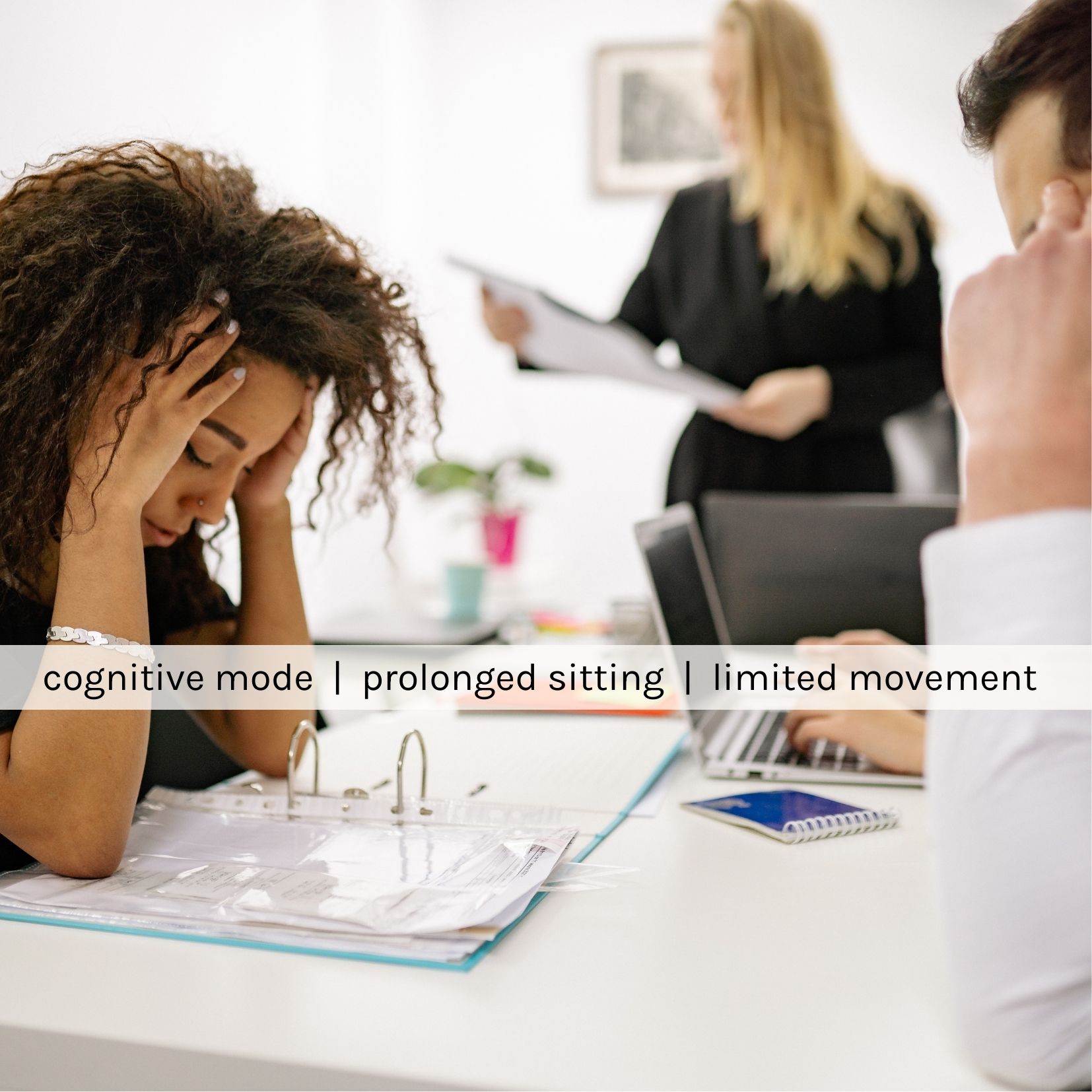
Five Ways High-Functioning Adults Unknowingly Override Their Bodies
For many professionals, the body does not stop functioning simply because stress is present. In fact, capable people often become even more effective under pressure. The difficulty is that this ability can quietly train the nervous system to operate in a narrow range where effort dominates and recovery becomes less automatic.
-
Mistaking endurance for regulation
Many capable adults take pride in their ability to keep going. They can work long hours, stay focused under pressure, and push through fatigue when necessary. In demanding professions this endurance is often rewarded.
However, endurance is not the same as regulation. The nervous system is designed to cycle between effort and recovery. When effort dominates for long periods, the body gradually loses some of its ability to reset itself. A person may still perform well, but internally the system is operating in a narrower physiological range.
-
Remaining in the same position for long periods without noticing
Many professionals spend much of the day sitting—at desks, in meetings, or in front of screens. Sitting itself is not the problem. The issue is the lack of variation that often accompanies deep concentration.
Healthy posture is dynamic. The body naturally shifts weight, redistributes muscular effort, and adjusts position throughout the day. But when attention becomes fully absorbed in cognitive work, people frequently remain in the same position for long periods without realizing it. The body begins to hold rather than move, creating low-grade tension that accumulates gradually.
-
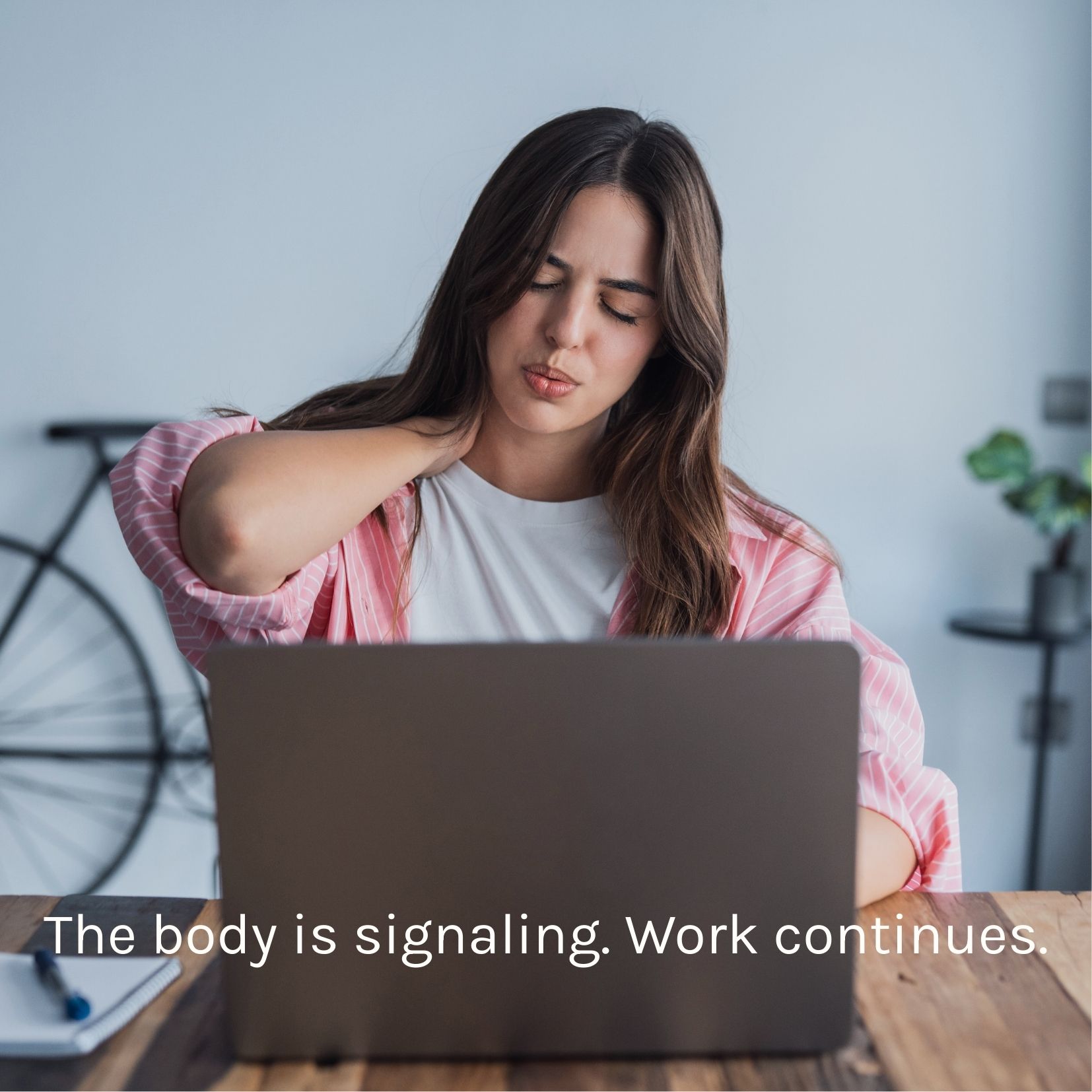
Recognizing fatigue but continuing to override it
Most people can recognize when they are tired. The problem is not awareness, but the fact that awareness rarely changes behavior.
Many professionals notice fatigue and immediately negotiate with themselves: “Just one more email.” “I’ll finish this first.” “I don’t have time to stop right now.” Over time the nervous system learns that fatigue signals will not lead to rest or adjustment. They become background noise.
-
Confusing good posture with rigid posture
Culturally, good posture is often imagined as holding the body upright in a disciplined way—shoulders back, spine straight, the body held in place. But healthy posture is not rigidity.
Healthy posture involves continuous micro-adjustment. The spine subtly reorganizes itself, breathing expands and softens the rib cage, and weight shifts through the pelvis and feet. When posture becomes something we hold rather than something that moves, tension accumulates in the muscles meant to support us.
-
Living almost entirely in cognitive mode
Many high-responsibility adults spend most of their waking hours thinking, planning, analyzing, and responding to complex situations. This cognitive capacity is often their greatest strength.
However, when attention remains almost exclusively in the head, signals from the body become quieter. Breathing patterns change, muscles remain slightly braced, and movement becomes minimal. The person continues functioning effectively, but their internal feedback system becomes easier to ignore.
What Restores the Range
If the problem is chronic override, the solution is not more discipline. Most high-functioning adults already have more discipline than they need.
What the body needs instead is range.
Range means the nervous system regaining the ability to move between different states—effort and recovery, focus and sensing, activation and rest. When the body spends too much time in one mode, especially cognitive effort, the internal signals that help regulate stress gradually lose their influence.
Adaptability is not a luxury. It is a survival capacity.
Biology has always favored systems that can adjust to changing conditions. Species that survive disruption are rarely the largest or strongest; they are the ones capable of adapting. The same principle applies to the human nervous system.
Yet many modern attempts to address stress stay superficial. Someone can rotate desks, sit on a different chair, or stand at a new workstation and still stare at the same screen, brace the same muscles, remain in cognitive mode, and stay in a state of low-grade activation.
That is not true range.
It is simply a slightly different version of the same constraint.
Real adaptation is not merely changing position. It is restoring the capacity to shift state.
Movement plays an important role in restoring this capacity. Unlike thinking, movement directly changes breathing patterns, muscular tension, and sensory awareness. When the body shifts weight, explores rhythm, and moves through varied patterns, the nervous system begins to recalibrate. Muscles that have been holding soften, breathing becomes fuller, and internal feedback becomes easier to perceive again.
A resilient body is not a body that holds itself together more rigidly.
It is a body that can adjust.
Longevity is not only about living longer. It is about maintaining the range that allows life to remain responsive, adaptable, and alive from the inside.
Large epidemiological studies consistently show that regular movement is associated with lower risk of chronic disease and mortality across adulthood. Movement appears to support not only physical health but the body’s broader capacity to regulate stress and adapt to changing conditions.
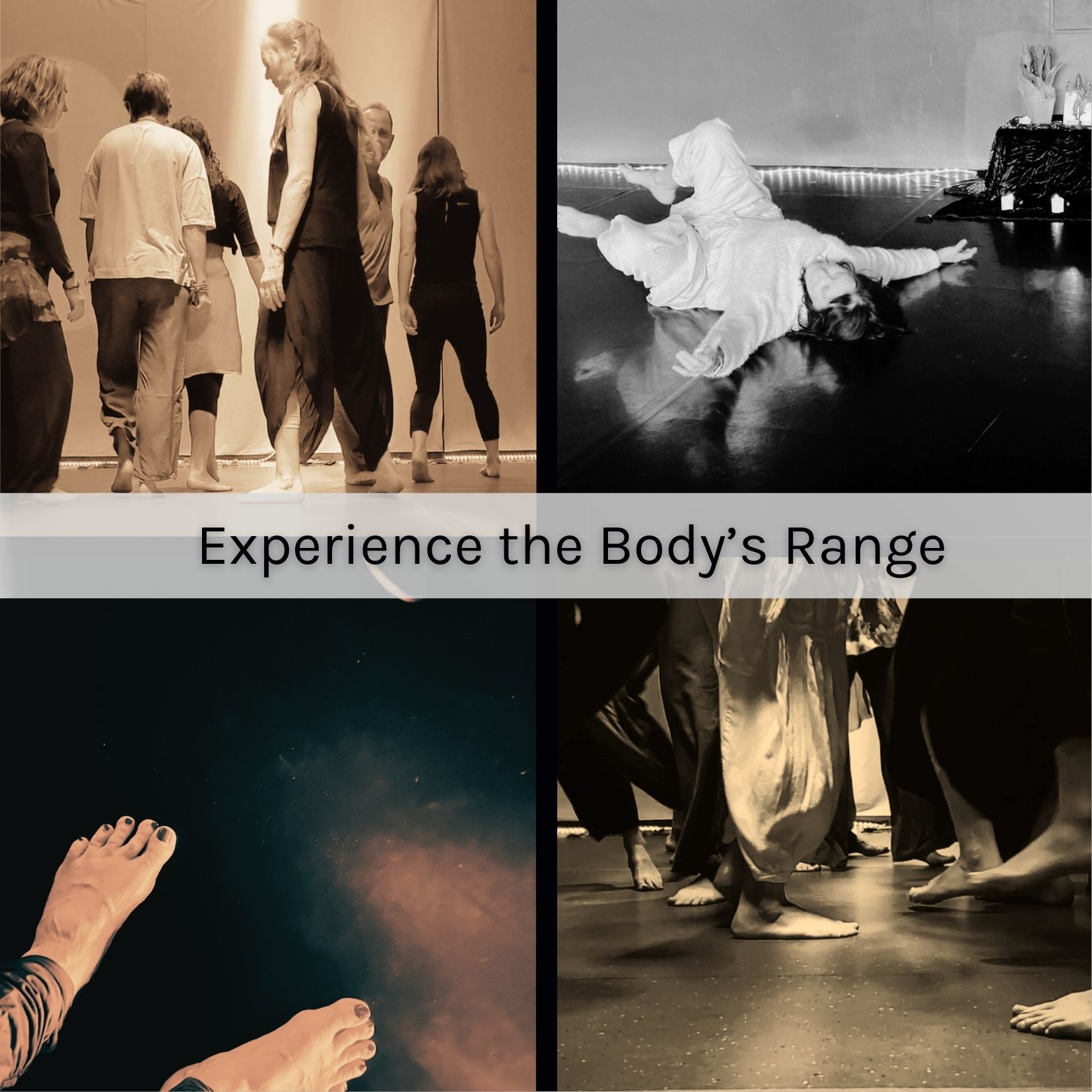
Experiencing Range Instead of Thinking About It
Understanding these patterns intellectually is helpful, but change usually happens through experience rather than analysis.
Many professionals already spend most of their day thinking and solving problems. The body reorganizes itself differently—through movement, sensation, and shifts in attention.
This is why movement practices that combine awareness, rhythm, and variation can be so powerful. They interrupt the familiar patterns of holding, pushing, and overriding that many adults carry into their daily lives.
Research on dance and complex movement suggests that these practices engage sensory, motor, emotional, cognitive, and social systems simultaneously, which may help explain why awareness-based movement influences the nervous system differently from repetitive exercise alone.
My work focuses on creating spaces where this kind of reconnection can happen in a practical way. Through structured movement practices rooted in the 5Rhythms tradition, adults navigating stress, responsibility, and life transitions can rediscover the flexibility and resilience that sustained cognitive effort can gradually narrow.
Longevity is not only about living longer.
It is about maintaining the range that allows life to remain responsive, adaptable, and alive.

Join the Aurras Circle
Receive monthly somatic reflections, early event invites, and practices to help you return to your body.
No spam, no pressure — just rhythm, breath, and story.
We hate SPAM. We will never sell your information, for any reason.